€0.00
Your cart is empty
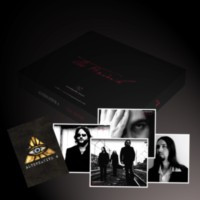
Great melodic goth metal from Finland, for fans of bands such as : Him, To/die/For , Katatonia. Tracks list :
Test pressing, numbered to 10 copies, with custom hype sticker
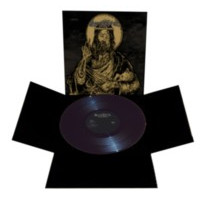
After a whole decade of silence, Downfall Of Nur is back with a new album. The studio project born from Italian-born Antonio Sanna is finally ready to give a proper follow up to the acclaimed debut Umbras de Barbagia (2015). And the Firmament will Burn to Quench the Pain of this Earth unfolds as a profound reflection on the ancestral memory and deeply rooted symbols of Sardinia.
At its core lies the dual figure of the feminine: the Mother Goddess, an ancient archetype associated with fertility, the earth, and permanence, represented in the prehistoric iconography of Sardinia, and human mothers, silent protagonists who carry the restrained sorrow of mourning their children lost to ancestral conflicts, such as the disamistade, a ritualized enmity deeply embedded in Sardinian cultural memory.
The album’s central narrative revolves around the transition of an individual caught in these ancient cycles of hostility. Upon shedding his physical form, his spirit merges with the archetype of the Mother Goddess, an ancestral presence embodying the exhaustion provoked by the endless repetition of violence and death. This union marks a threshold: an essential act of purification that confronts oblivion and halts the ceaseless recurrence of suffering.
Though not explicitly named, the mothers form the ethical and emotional foundation of the work. Their grief transcends the individual and extends into the collective, shaping the social memory and the ontological relationship between human beings and the land they inhabit. The Mother Goddess and the mothers symbolically intertwine, revealing the rupture between humanity and the earth that sustains it. The album posits a breaking point: the weariness of the Mother Goddess in the face of perpetual cycles of vengeance, death, and forgetting. This rupture is not presented as punitive, but as an inevitable act of purification, fire consuming what has been denied by collective memory.
And the Firmament Will Burn to Quench the Pain of This Earth calls for attentive and contemplative listening. It is not a linear or conclusive narrative, but a fragmented ritual space that opens the way to multiple layers of interpretation, where history, mythology, and human mourning converge. Ultimately, the album stands as an act of living memory—a tribute to Sardinia as a sacred, wounded land, bearer of silenced histories—and an invitation to recognize, through listening, the profound sorrow that resides in the broken bond between man, woman, earth, and the divine.
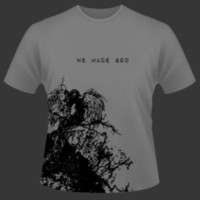
Available in Medium / Large / XL / XXL: please kindly indicate your size in the order's notes!
After a whole decade of silence, Downfall Of Nur is back with a new album. The studio project born from Italian-born Antonio Sanna is finally ready to give a proper follow up to the acclaimed debut Umbras de Barbagia (2015). And the Firmament will Burn to Quench the Pain of this Earth unfolds as a profound reflection on the ancestral memory and deeply rooted symbols of Sardinia.
At its core lies the dual figure of the feminine: the Mother Goddess, an ancient archetype associated with fertility, the earth, and permanence, represented in the prehistoric iconography of Sardinia, and human mothers, silent protagonists who carry the restrained sorrow of mourning their children lost to ancestral conflicts, such as the disamistade, a ritualized enmity deeply embedded in Sardinian cultural memory.
The album’s central narrative revolves around the transition of an individual caught in these ancient cycles of hostility. Upon shedding his physical form, his spirit merges with the archetype of the Mother Goddess, an ancestral presence embodying the exhaustion provoked by the endless repetition of violence and death. This union marks a threshold: an essential act of purification that confronts oblivion and halts the ceaseless recurrence of suffering.
Though not explicitly named, the mothers form the ethical and emotional foundation of the work. Their grief transcends the individual and extends into the collective, shaping the social memory and the ontological relationship between human beings and the land they inhabit. The Mother Goddess and the mothers symbolically intertwine, revealing the rupture between humanity and the earth that sustains it. The album posits a breaking point: the weariness of the Mother Goddess in the face of perpetual cycles of vengeance, death, and forgetting. This rupture is not presented as punitive, but as an inevitable act of purification, fire consuming what has been denied by collective memory.
And the Firmament Will Burn to Quench the Pain of This Earth calls for attentive and contemplative listening. It is not a linear or conclusive narrative, but a fragmented ritual space that opens the way to multiple layers of interpretation, where history, mythology, and human mourning converge. Ultimately, the album stands as an act of living memory—a tribute to Sardinia as a sacred, wounded land, bearer of silenced histories—and an invitation to recognize, through listening, the profound sorrow that resides in the broken bond between man, woman, earth, and the divine.
Avantgarde/Sound Cave exclusive edition LTD 100
After a whole decade of silence, Downfall Of Nur is back with a new album. The studio project born from Italian-born Antonio Sanna is finally ready to give a proper follow up to the acclaimed debut Umbras de Barbagia (2015). And the Firmament will Burn to Quench the Pain of this Earth unfolds as a profound reflection on the ancestral memory and deeply rooted symbols of Sardinia.
At its core lies the dual figure of the feminine: the Mother Goddess, an ancient archetype associated with fertility, the earth, and permanence, represented in the prehistoric iconography of Sardinia, and human mothers, silent protagonists who carry the restrained sorrow of mourning their children lost to ancestral conflicts, such as the disamistade, a ritualized enmity deeply embedded in Sardinian cultural memory.
The album’s central narrative revolves around the transition of an individual caught in these ancient cycles of hostility. Upon shedding his physical form, his spirit merges with the archetype of the Mother Goddess, an ancestral presence embodying the exhaustion provoked by the endless repetition of violence and death. This union marks a threshold: an essential act of purification that confronts oblivion and halts the ceaseless recurrence of suffering.
Though not explicitly named, the mothers form the ethical and emotional foundation of the work. Their grief transcends the individual and extends into the collective, shaping the social memory and the ontological relationship between human beings and the land they inhabit. The Mother Goddess and the mothers symbolically intertwine, revealing the rupture between humanity and the earth that sustains it. The album posits a breaking point: the weariness of the Mother Goddess in the face of perpetual cycles of vengeance, death, and forgetting. This rupture is not presented as punitive, but as an inevitable act of purification, fire consuming what has been denied by collective memory.
And the Firmament Will Burn to Quench the Pain of This Earth calls for attentive and contemplative listening. It is not a linear or conclusive narrative, but a fragmented ritual space that opens the way to multiple layers of interpretation, where history, mythology, and human mourning converge. Ultimately, the album stands as an act of living memory—a tribute to Sardinia as a sacred, wounded land, bearer of silenced histories—and an invitation to recognize, through listening, the profound sorrow that resides in the broken bond between man, woman, earth, and the divine.
After a whole decade of silence, Downfall Of Nur is back with a new album. The studio project born from Italian-born Antonio Sanna is finally ready to give a proper follow up to the acclaimed debut Umbras de Barbagia (2015). And the Firmament will Burn to Quench the Pain of this Earth unfolds as a profound reflection on the ancestral memory and deeply rooted symbols of Sardinia.
At its core lies the dual figure of the feminine: the Mother Goddess, an ancient archetype associated with fertility, the earth, and permanence, represented in the prehistoric iconography of Sardinia, and human mothers, silent protagonists who carry the restrained sorrow of mourning their children lost to ancestral conflicts, such as the disamistade, a ritualized enmity deeply embedded in Sardinian cultural memory.
The album’s central narrative revolves around the transition of an individual caught in these ancient cycles of hostility. Upon shedding his physical form, his spirit merges with the archetype of the Mother Goddess, an ancestral presence embodying the exhaustion provoked by the endless repetition of violence and death. This union marks a threshold: an essential act of purification that confronts oblivion and halts the ceaseless recurrence of suffering.
Though not explicitly named, the mothers form the ethical and emotional foundation of the work. Their grief transcends the individual and extends into the collective, shaping the social memory and the ontological relationship between human beings and the land they inhabit. The Mother Goddess and the mothers symbolically intertwine, revealing the rupture between humanity and the earth that sustains it. The album posits a breaking point: the weariness of the Mother Goddess in the face of perpetual cycles of vengeance, death, and forgetting. This rupture is not presented as punitive, but as an inevitable act of purification, fire consuming what has been denied by collective memory.
And the Firmament Will Burn to Quench the Pain of This Earth calls for attentive and contemplative listening. It is not a linear or conclusive narrative, but a fragmented ritual space that opens the way to multiple layers of interpretation, where history, mythology, and human mourning converge. Ultimately, the album stands as an act of living memory—a tribute to Sardinia as a sacred, wounded land, bearer of silenced histories—and an invitation to recognize, through listening, the profound sorrow that resides in the broken bond between man, woman, earth, and the divine.
After a whole decade of silence, Downfall Of Nur is back with a new album. The studio project born from Italian-born Antonio Sanna is finally ready to give a proper follow up to the acclaimed debut Umbras de Barbagia (2015). And the Firmament will Burn to Quench the Pain of this Earth unfolds as a profound reflection on the ancestral memory and deeply rooted symbols of Sardinia.
At its core lies the dual figure of the feminine: the Mother Goddess, an ancient archetype associated with fertility, the earth, and permanence, represented in the prehistoric iconography of Sardinia, and human mothers, silent protagonists who carry the restrained sorrow of mourning their children lost to ancestral conflicts, such as the disamistade, a ritualized enmity deeply embedded in Sardinian cultural memory.
The album’s central narrative revolves around the transition of an individual caught in these ancient cycles of hostility. Upon shedding his physical form, his spirit merges with the archetype of the Mother Goddess, an ancestral presence embodying the exhaustion provoked by the endless repetition of violence and death. This union marks a threshold: an essential act of purification that confronts oblivion and halts the ceaseless recurrence of suffering.
Though not explicitly named, the mothers form the ethical and emotional foundation of the work. Their grief transcends the individual and extends into the collective, shaping the social memory and the ontological relationship between human beings and the land they inhabit. The Mother Goddess and the mothers symbolically intertwine, revealing the rupture between humanity and the earth that sustains it. The album posits a breaking point: the weariness of the Mother Goddess in the face of perpetual cycles of vengeance, death, and forgetting. This rupture is not presented as punitive, but as an inevitable act of purification, fire consuming what has been denied by collective memory.
And the Firmament Will Burn to Quench the Pain of This Earth calls for attentive and contemplative listening. It is not a linear or conclusive narrative, but a fragmented ritual space that opens the way to multiple layers of interpretation, where history, mythology, and human mourning converge. Ultimately, the album stands as an act of living memory—a tribute to Sardinia as a sacred, wounded land, bearer of silenced histories—and an invitation to recognize, through listening, the profound sorrow that resides in the broken bond between man, woman, earth, and the divine.

After a whole decade of silence, Downfall Of Nur is back with a new album. The studio project born from Italian-born Antonio Sanna is finally ready to give a proper follow up to the acclaimed debut Umbras de Barbagia (2015). And the Firmament will Burn to Quench the Pain of this Earth unfolds as a profound reflection on the ancestral memory and deeply rooted symbols of Sardinia.
At its core lies the dual figure of the feminine: the Mother Goddess, an ancient archetype associated with fertility, the earth, and permanence, represented in the prehistoric iconography of Sardinia, and human mothers, silent protagonists who carry the restrained sorrow of mourning their children lost to ancestral conflicts, such as the disamistade, a ritualized enmity deeply embedded in Sardinian cultural memory.
The album’s central narrative revolves around the transition of an individual caught in these ancient cycles of hostility. Upon shedding his physical form, his spirit merges with the archetype of the Mother Goddess, an ancestral presence embodying the exhaustion provoked by the endless repetition of violence and death. This union marks a threshold: an essential act of purification that confronts oblivion and halts the ceaseless recurrence of suffering.
Though not explicitly named, the mothers form the ethical and emotional foundation of the work. Their grief transcends the individual and extends into the collective, shaping the social memory and the ontological relationship between human beings and the land they inhabit. The Mother Goddess and the mothers symbolically intertwine, revealing the rupture between humanity and the earth that sustains it. The album posits a breaking point: the weariness of the Mother Goddess in the face of perpetual cycles of vengeance, death, and forgetting. This rupture is not presented as punitive, but as an inevitable act of purification, fire consuming what has been denied by collective memory.
And the Firmament Will Burn to Quench the Pain of This Earth calls for attentive and contemplative listening. It is not a linear or conclusive narrative, but a fragmented ritual space that opens the way to multiple layers of interpretation, where history, mythology, and human mourning converge. Ultimately, the album stands as an act of living memory—a tribute to Sardinia as a sacred, wounded land, bearer of silenced histories—and an invitation to recognize, through listening, the profound sorrow that resides in the broken bond between man, woman, earth, and the divine.
Barren Canyon, the reclusive Canadian act formed by the mysterious duo of multi-instrumentalists Maikan and Absent, re-emerge with A Virulent Steam, their second release for Avantgarde Music after eight years of silence. Whereas 2018’s World of Wounds contrasted bursts of metal with cold ambient passages, Barren Canyon now return transformed, melding their influences into a tempered miasmic haze. Warmer synth tones drift and swell like a toxic fog, diffusing into harsher textures.
Taking the idea of “atmospheric metal” seriously and literally, A Virulent Stream draws both musically and lyrically upon themes of noxious air, suffocation, and the airborne contaminants of industrial society. The very cover picture is a statement in itself, as the band chose “Smoke from the continuously operating steel plants gives Birmingham its
spectacular nighttime red-orange glow” by Leroy Woodson to visually introduce their opus.
"Taetra Philosophia" is the NEW studio album by Abysmal Grief after a few side-releases (live albums and a compilation of rarities and oddities).
second press in dark red / black marble
Legendary Nortt's 1998 demo finally and officially released after a few unauthorized versions.
Comes with bonus track "Nattens Tale"
Extra limited edition to 80 ex
Legendary Nortt's 1998 demo finally and officially released after a few unauthorized versions.
Comes with bonus track "Nattens Tale"
Digipak edition ltd 300
Legendary Nortt's 1998 demo finally and officially released after a few unauthorized versions.
Comes with bonus track "Nattens Tale"
Marble vinyl edition (150 copies)
Legendary Nortt's 1998 demo finally and officially released after a few unauthorized versions.
Comes with bonus track "Nattens Tale"
Black vinyl edition (100 copies)
Making heads turn since 2016 with the old school yet progressive cosmic death metal exposed in their demos, EPs and split with Undeath and Into Coffin, Italy's Devoid Of Thought released their 40 minutes debut full-length album Outer World Graves via Everlasting Spew Records in 2021. Between 2022 and 2025 the band focused on live activities, playing a number of prime festivals and shows such as Frantic Fest, Brutal Assault, Stige Fest, several European tours with Artificial Brain and Ad Nauseam and supported bands like Beherit, Necrot, Suffering Hour and many more…
Combining influences from bands like Timeghoul, Blood Incantation, Voivod and Incantation in a unique, bizarre and twisted vortex, the Italian quartet is now ready to celebrate its tenth year of existence with their sophomore studio record, self-titled Devoid Of Thought.
From outer world graves, where stars go to die and the effigies of distant planets are found, the portal has now opened toward a quantum leap, placed at the incipit of the end. The panspermic biodome is a colorful multiverse, awash in stellar life and boiling with transformation. Time here represents an entropic euphoria and is no longer a mortal clock. From a putrescent mire, a new form of life is born, endowed with an unprecedented shell, different from that of any known species. Consciousness is now ready to cross the cosmos once again and navigate through oblivion, until returning to a new beginning, in order to experience itself into many forms.
Making heads turn since 2016 with the old school yet progressive cosmic death metal exposed in their demos, EPs and split with Undeath and Into Coffin, Italy's Devoid Of Thought released their 40 minutes debut full-length album Outer World Graves via Everlasting Spew Records in 2021. Between 2022 and 2025 the band focused on live activities, playing a number of prime festivals and shows such as Frantic Fest, Brutal Assault, Stige Fest, several European tours with Artificial Brain and Ad Nauseam and supported bands like Beherit, Necrot, Suffering Hour and many more…
Combining influences from bands like Timeghoul, Blood Incantation, Voivod and Incantation in a unique, bizarre and twisted vortex, the Italian quartet is now ready to celebrate its tenth year of existence with their sophomore studio record, self-titled Devoid Of Thought.
From outer world graves, where stars go to die and the effigies of distant planets are found, the portal has now opened toward a quantum leap, placed at the incipit of the end. The panspermic biodome is a colorful multiverse, awash in stellar life and boiling with transformation. Time here represents an entropic euphoria and is no longer a mortal clock. From a putrescent mire, a new form of life is born, endowed with an unprecedented shell, different from that of any known species. Consciousness is now ready to cross the cosmos once again and navigate through oblivion, until returning to a new beginning, in order to experience itself into many forms.
Making heads turn since 2016 with the old school yet progressive cosmic death metal exposed in their demos, EPs and split with Undeath and Into Coffin, Italy's Devoid Of Thought released their 40 minutes debut full-length album Outer World Graves via Everlasting Spew Records in 2021. Between 2022 and 2025 the band focused on live activities, playing a number of prime festivals and shows such as Frantic Fest, Brutal Assault, Stige Fest, several European tours with Artificial Brain and Ad Nauseam and supported bands like Beherit, Necrot, Suffering Hour and many more…
Combining influences from bands like Timeghoul, Blood Incantation, Voivod and Incantation in a unique, bizarre and twisted vortex, the Italian quartet is now ready to celebrate its tenth year of existence with their sophomore studio record, self-titled Devoid Of Thought.
From outer world graves, where stars go to die and the effigies of distant planets are found, the portal has now opened toward a quantum leap, placed at the incipit of the end. The panspermic biodome is a colorful multiverse, awash in stellar life and boiling with transformation. Time here represents an entropic euphoria and is no longer a mortal clock. From a putrescent mire, a new form of life is born, endowed with an unprecedented shell, different from that of any known species. Consciousness is now ready to cross the cosmos once again and navigate through oblivion, until returning to a new beginning, in order to experience itself into many forms.