€0.00
Your cart is empty
Other sounds - Anything that is not metal
This is a preorder: release date is set to June, 9
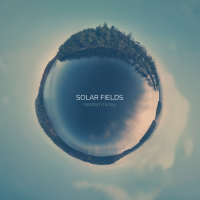
2012's 'Random Friday' is one of the most popular Solar Fields albums ...and here it comes back to life again, as usual with a state of the Art remastering by Robert Elster @Elster Mastering and revamped in a 6 panels digipak CD in case you missed the original compact disc edition (as well as treated for the first time for a vinyl release).
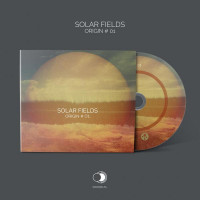
Six panels digipak CD
The quest for a complete Solar Fields reissue collection continues here at Sidereal, and this time we bring back to light the first installments in Magnus Birgersson’s unfinished tracks archive.
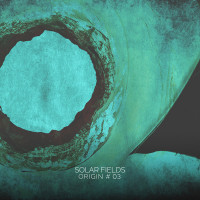
Origin #01, originally released in 2010, was the first compilation of Solar Fields finished unfinished pieces. A series of audio stems born in various periods of time, in this case from 2002 to 2008, then completed and refined.
Such a genesis makes the Origin series something different in the Solar Fields catalog, as the usual consistency and unity of Magnus’s studio albums is nowhere to be found here, in favor of a multi-faceted, various and fragmented approach. Every track is completely different from the other, and you never know what’s lying behind the next corner. Every note sounds 101% Solar Fields, but the spectre covered by Origin #01 was an entirely different width compared to what the Swedish producer released until that moment.
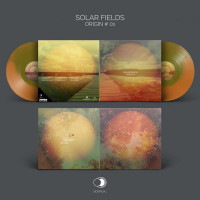
"gold & orange" vinyl
The quest for a complete Solar Fields reissue collection continues here at Sidereal, and this time we bring back to light the first installments in Magnus Birgersson’s unfinished tracks archive.
Origin #01, originally released in 2010, was the first compilation of Solar Fields finished unfinished pieces. A series of audio stems born in various periods of time, in this case from 2002 to 2008, then completed and refined.
Such a genesis makes the Origin series something different in the Solar Fields catalog, as the usual consistency and unity of Magnus’s studio albums is nowhere to be found here, in favor of a multi-faceted, various and fragmented approach. Every track is completely different from the other, and you never know what’s lying behind the next corner. Every note sounds 101% Solar Fields, but the spectre covered by Origin #01 was an entirely different width compared to what the Swedish producer released until that moment.
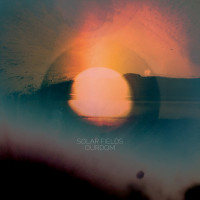
3rd print/3rd version.
6-panel regular digipak edition, with 12 pages booklet.

Five years ago, back in September 2016, Stefano Gentile published a photographic book entitled IL SILENZIO DEI TUOI PASSI (The Silence of Your Steps), which collected a series of 56 pictures, both in b/w and colour, dedicated to the nights in Venice. The book was a journey through the most remote "calli" and "campi" (streets, alleys and squares, as they're called in Venice) in search of the true 'breath' of the city, far away from the hordes of tourists who 'attack' it every day during daylight hours.
On such occasion, renowned musician Gigi Masin composed a 30 minutes epic ambient track entitled VENEZIA 2016 which was the perfect soundtrack to the images included in the book. The track was published on CD and released bounded with the book itself in a limited edition of 480 copies only, and has been unavailable for years now.
In 2021 Gigi Masin returned to that great piece of music and to its timeless sounds. Finally, Silentes can now offer PLAYS VENEZIA, Masin's latest work contanining a re-edited version of that 'pearl', accompanied by two unreleased tracks composed and recorded in the same period.
Once again inspired by the city, Masin created an enduring and wonderful ambient masterpiece, a sort of return to the origins, to his home. Adding to the intrinsic quality of the originals, the tracks were beautifully mastered by Brandenburg Mastering in Amsterdam.
PLAYS VENEZIA is simply an unmissable release and one of Masin's greatest accomplishment in a long carrier that never ceases to amaze us.
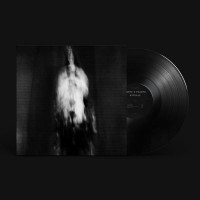
Cigno is an emerging artist from Rome, delving into the depths of dark ambient, industrial, and ritualistic music. Drawing inspiration from ancient traditions, somber atmospheres, and the emotional landscape of grief and mourning, Cigno crafts a soundscape that is both haunting and captivating.
"Morte e Pianto Rituale" is Cigno's debut album, a work steeped in the themes of death and ritual mourning. The album weaves together layers of deep ambient sounds, atmospheric drones, and percussive elements to create an immersive experience. It stands as a meditation on the solemnity of death, the cycles of loss, and the catharsis found in ritual. Each track builds an evolving soundscape, incorporating elements like field recordings, drone tones, and tribal percussion. Cigno's music invokes an almost cinematic quality, resembling a sonic ritual that guides listeners through the emotional states of grief, introspection, and release.
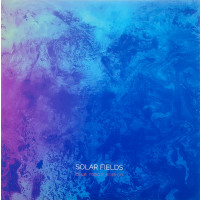
Six panels digipak CD
Long out of print, Blue Moon Station is the second full-length album by Swedish producer Magnus Birgersson, aka Solar Fields.
These eleven songs were originally released in 2003, and helped building and shaping Solar Fields signature soundscapes. Ambient wide spaces intertwined with synthetic beats (“Infection 268-7”) and off-planet drones (“Magnetic Air”), peacefully accompanying you through extra-vehicular activities on Blue Moon Station, wherever in the galaxy it may be.
Sidereal will bring Solar Fields sophomore album to a new life re-releasing it on CD with a completely renewed artwork, as well as bringing it to a (double) vinyl version for the first time ever in two stunning colors in July 2021.
Blue Moon Station comes in a new life also in its audio content: not only a beautiful new artwork and charming vinyl colors, but a huge remastering job done by Robert Elster at Elster Mastering Studio will feed the picky audiophile’s hunger
Time to pack your bags and leave for Blue Moon Station. It’s going to be a wonderful trip.