
€ 0,00
Il carrello è vuoto
Vendita vinili - musica Black Metal e Dark estrema

French black metal entity Haemoth has emerged from the shadows with the announcement of a brand new album “Black Dust”. Known for their uncompromising vision and relentless sonic aggression, the band continues to stand as one of the darker voices within the French black metal underground.

With “My Body to the Worms”, Mammon’s Throne bends the sub-genres of metal to their will to forge a crushing offering of dark extreme metal!

Black 12" vinyl (33rpm) in deluxe gatefold sleeve with embossing and new art inside
First pressing: 1,550 copies.
Recorded in 2002 and considered their first official release, this 2-track demo is the prologue to DARKSPACE’s first album.
It offers a similar musical experience to "Dark Space I", with dark and oppressive atmospheres thanks to a raw sound and more primitive production.
Cult ambient black metal pioneer DARKSPACE (ft. Members of Paysage d'Hiver + Sun of the Blind) is now reissuing its complete discography, which includes four full-lengths and an EP, via Season of Mist!
Dubbed “The Most Mysterious Anonymous Blackest Black Metal Band,” the enigmatic Swiss trio is known for their hypnotic and otherworldly sound, which has greatly influenced modern atmospheric and cosmic black metal as we know it today.
The band will be releasing a brand new album via Season of Mist at a later date!
For fans of PAYSAGE D'HIVER, SUN OF THE BLIND, ARKHTINN, OMEGA INFINITY.

Comes with a 2-page insert and a download card. Pressed on grey/black marble effect heavy vinyl. Colors on final record may vary to a degree from the mockup.
PURE WRATH were formed 2014 in West Java, Indonesia as the anguished, atmospheric and affecting Black Metal project of multi-instrumentalist Januaryo Hardy.
Fourth full-length "Bleak Days Ahead" builds wonderfully upon the panoramic and poignant melodies of 2022's wounded "Hymn to the Woeful Hearts". Utilising a more 'live' and separated production, the band and guests have dialled back the cinematics and upped the dynamics - allowing a varied sound palette including organ, mellotron, throat singing, piano and saxophone to express the sadness in high-functioning depression and the suffocating routines of modern life.

Avantgarde/Sound Cave exclusive edition LTD 100
After a whole decade of silence, Downfall Of Nur is back with a new album. The studio project born from Italian-born Antonio Sanna is finally ready to give a proper follow up to the acclaimed debut Umbras de Barbagia (2015). And the Firmament will Burn to Quench the Pain of this Earth unfolds as a profound reflection on the ancestral memory and deeply rooted symbols of Sardinia.
At its core lies the dual figure of the feminine: the Mother Goddess, an ancient archetype associated with fertility, the earth, and permanence, represented in the prehistoric iconography of Sardinia, and human mothers, silent protagonists who carry the restrained sorrow of mourning their children lost to ancestral conflicts, such as the disamistade, a ritualized enmity deeply embedded in Sardinian cultural memory.
The album’s central narrative revolves around the transition of an individual caught in these ancient cycles of hostility. Upon shedding his physical form, his spirit merges with the archetype of the Mother Goddess, an ancestral presence embodying the exhaustion provoked by the endless repetition of violence and death. This union marks a threshold: an essential act of purification that confronts oblivion and halts the ceaseless recurrence of suffering.
Though not explicitly named, the mothers form the ethical and emotional foundation of the work. Their grief transcends the individual and extends into the collective, shaping the social memory and the ontological relationship between human beings and the land they inhabit. The Mother Goddess and the mothers symbolically intertwine, revealing the rupture between humanity and the earth that sustains it. The album posits a breaking point: the weariness of the Mother Goddess in the face of perpetual cycles of vengeance, death, and forgetting. This rupture is not presented as punitive, but as an inevitable act of purification, fire consuming what has been denied by collective memory.
And the Firmament Will Burn to Quench the Pain of This Earth calls for attentive and contemplative listening. It is not a linear or conclusive narrative, but a fragmented ritual space that opens the way to multiple layers of interpretation, where history, mythology, and human mourning converge. Ultimately, the album stands as an act of living memory—a tribute to Sardinia as a sacred, wounded land, bearer of silenced histories—and an invitation to recognize, through listening, the profound sorrow that resides in the broken bond between man, woman, earth, and the divine.
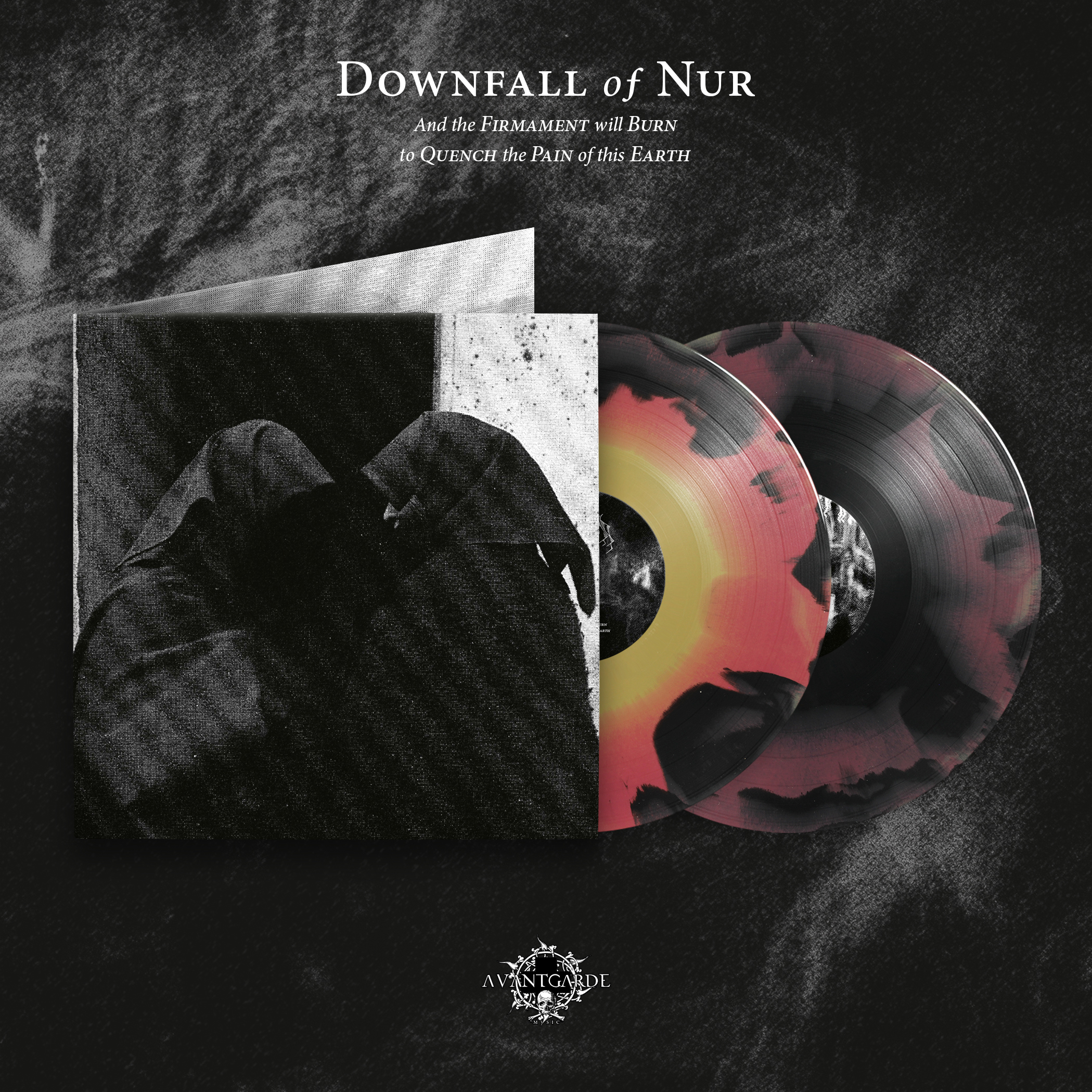

After a whole decade of silence, Downfall Of Nur is back with a new album. The studio project born from Italian-born Antonio Sanna is finally ready to give a proper follow up to the acclaimed debut Umbras de Barbagia (2015). And the Firmament will Burn to Quench the Pain of this Earth unfolds as a profound reflection on the ancestral memory and deeply rooted symbols of Sardinia.
At its core lies the dual figure of the feminine: the Mother Goddess, an ancient archetype associated with fertility, the earth, and permanence, represented in the prehistoric iconography of Sardinia, and human mothers, silent protagonists who carry the restrained sorrow of mourning their children lost to ancestral conflicts, such as the disamistade, a ritualized enmity deeply embedded in Sardinian cultural memory.
The album’s central narrative revolves around the transition of an individual caught in these ancient cycles of hostility. Upon shedding his physical form, his spirit merges with the archetype of the Mother Goddess, an ancestral presence embodying the exhaustion provoked by the endless repetition of violence and death. This union marks a threshold: an essential act of purification that confronts oblivion and halts the ceaseless recurrence of suffering.
Though not explicitly named, the mothers form the ethical and emotional foundation of the work. Their grief transcends the individual and extends into the collective, shaping the social memory and the ontological relationship between human beings and the land they inhabit. The Mother Goddess and the mothers symbolically intertwine, revealing the rupture between humanity and the earth that sustains it. The album posits a breaking point: the weariness of the Mother Goddess in the face of perpetual cycles of vengeance, death, and forgetting. This rupture is not presented as punitive, but as an inevitable act of purification, fire consuming what has been denied by collective memory.
And the Firmament Will Burn to Quench the Pain of This Earth calls for attentive and contemplative listening. It is not a linear or conclusive narrative, but a fragmented ritual space that opens the way to multiple layers of interpretation, where history, mythology, and human mourning converge. Ultimately, the album stands as an act of living memory—a tribute to Sardinia as a sacred, wounded land, bearer of silenced histories—and an invitation to recognize, through listening, the profound sorrow that resides in the broken bond between man, woman, earth, and the divine.
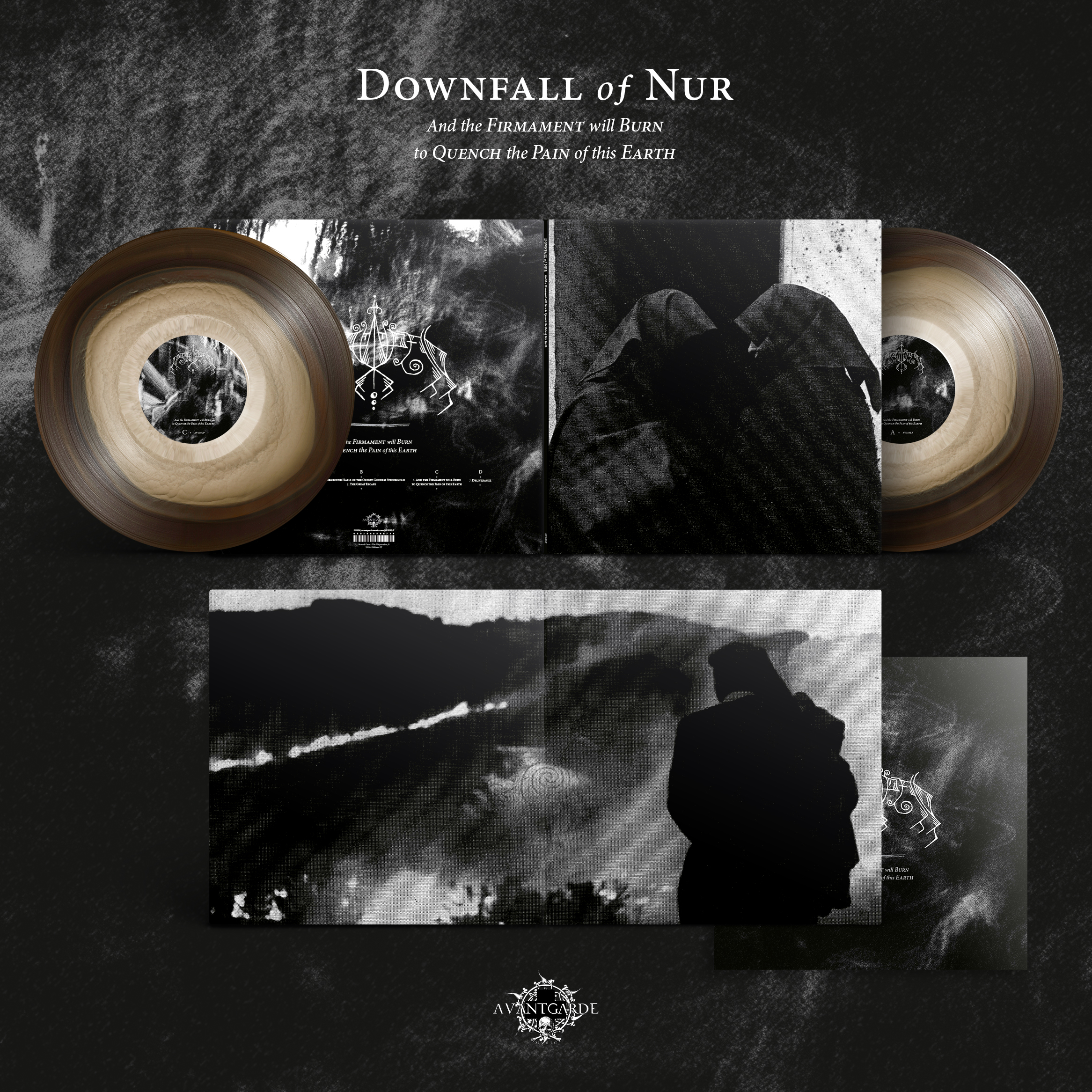

After a whole decade of silence, Downfall Of Nur is back with a new album. The studio project born from Italian-born Antonio Sanna is finally ready to give a proper follow up to the acclaimed debut Umbras de Barbagia (2015). And the Firmament will Burn to Quench the Pain of this Earth unfolds as a profound reflection on the ancestral memory and deeply rooted symbols of Sardinia.
At its core lies the dual figure of the feminine: the Mother Goddess, an ancient archetype associated with fertility, the earth, and permanence, represented in the prehistoric iconography of Sardinia, and human mothers, silent protagonists who carry the restrained sorrow of mourning their children lost to ancestral conflicts, such as the disamistade, a ritualized enmity deeply embedded in Sardinian cultural memory.
The album’s central narrative revolves around the transition of an individual caught in these ancient cycles of hostility. Upon shedding his physical form, his spirit merges with the archetype of the Mother Goddess, an ancestral presence embodying the exhaustion provoked by the endless repetition of violence and death. This union marks a threshold: an essential act of purification that confronts oblivion and halts the ceaseless recurrence of suffering.
Though not explicitly named, the mothers form the ethical and emotional foundation of the work. Their grief transcends the individual and extends into the collective, shaping the social memory and the ontological relationship between human beings and the land they inhabit. The Mother Goddess and the mothers symbolically intertwine, revealing the rupture between humanity and the earth that sustains it. The album posits a breaking point: the weariness of the Mother Goddess in the face of perpetual cycles of vengeance, death, and forgetting. This rupture is not presented as punitive, but as an inevitable act of purification, fire consuming what has been denied by collective memory.
And the Firmament Will Burn to Quench the Pain of This Earth calls for attentive and contemplative listening. It is not a linear or conclusive narrative, but a fragmented ritual space that opens the way to multiple layers of interpretation, where history, mythology, and human mourning converge. Ultimately, the album stands as an act of living memory—a tribute to Sardinia as a sacred, wounded land, bearer of silenced histories—and an invitation to recognize, through listening, the profound sorrow that resides in the broken bond between man, woman, earth, and the divine.

“No Ritmo da Terra” is the second chapter from a trilogy of albums inspired in the work of Ailton Krenak. Articulating the “Ancestral Future” as an aesthetic project, the album incorporates Ailton’s philosophy through its sound design, manipulating Brazilian Folk Music elements and field recordings from the Amazon rainforest with futuristic electronic techniques from genres like Post-Rock, Glitch and Avant-Garde Metal. With lyrics in Portuguese, Tupi and Yoruba, the album recontextualizes Candomblé and Capoeira chants through an idiossyncratic sound palette developed to create a dialogue between ancestrality and futurism.
As an imediate need in the face of climate change and other end of the world omens, the Ancestral Future challenges antropocentric views of the world that conceive humanity as an organism separate from the body of Earth. Through the recovery of resistance technologies developed by the cultures that remained attached to the planet as a necessity of survival from the erasure of subjectivities in the colonial process, “No Ritmo da Terra” promotes an ontological realignation with nature.

CIRCULAR RUIN is the ever-recurring end of everything once great, the endless cycle of temporary prosperity followed by death and devastation, and the inevitable demise of humanity by its own hand.

Hybris Divina, the debut full-length from Oraculum, is a merciless assault and a sonic damnation. The title, signifying "Divine Transgression," guides the album's thematic descent into mythical and spiritual blasphemy. This record is a raw and chaotic maelstrom, delivering bludgeoning riffs, dissonant textures, and unholy invocations that return to the genre's forgotten primordial essence. It is a testament to the enduring, chaotic legacy of Chilean death metal—a calculated and feral vortex of sound. Hybris Divina is set to establish Oraculum as the modern standard-bearer for the most uncompromising, first-wave death metal sound.

TRANSILVANIA returns with "Magia Posthuma", an unholy necromantic spell of black/thrash metal. A deliberate, high-production assault from the emptied crypts of Austria, this is the definitive soundtrack to a post-mortem existence. The band delivers a blistering combination of vampiric fury, the raw, driving spirit of classic thrash, and the chilling, cold atmosphere of black metal.
