€ 0,00
Il carrello è vuoto
Vendita vinili - musica Black Metal e Dark estrema
Avantgarde/Sound Cave exclusive edition LTD 100
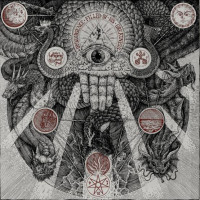
After a whole decade of silence, Downfall Of Nur is back with a new album. The studio project born from Italian-born Antonio Sanna is finally ready to give a proper follow up to the acclaimed debut Umbras de Barbagia (2015). And the Firmament will Burn to Quench the Pain of this Earth unfolds as a profound reflection on the ancestral memory and deeply rooted symbols of Sardinia.
At its core lies the dual figure of the feminine: the Mother Goddess, an ancient archetype associated with fertility, the earth, and permanence, represented in the prehistoric iconography of Sardinia, and human mothers, silent protagonists who carry the restrained sorrow of mourning their children lost to ancestral conflicts, such as the disamistade, a ritualized enmity deeply embedded in Sardinian cultural memory.
The album’s central narrative revolves around the transition of an individual caught in these ancient cycles of hostility. Upon shedding his physical form, his spirit merges with the archetype of the Mother Goddess, an ancestral presence embodying the exhaustion provoked by the endless repetition of violence and death. This union marks a threshold: an essential act of purification that confronts oblivion and halts the ceaseless recurrence of suffering.
Though not explicitly named, the mothers form the ethical and emotional foundation of the work. Their grief transcends the individual and extends into the collective, shaping the social memory and the ontological relationship between human beings and the land they inhabit. The Mother Goddess and the mothers symbolically intertwine, revealing the rupture between humanity and the earth that sustains it. The album posits a breaking point: the weariness of the Mother Goddess in the face of perpetual cycles of vengeance, death, and forgetting. This rupture is not presented as punitive, but as an inevitable act of purification, fire consuming what has been denied by collective memory.
And the Firmament Will Burn to Quench the Pain of This Earth calls for attentive and contemplative listening. It is not a linear or conclusive narrative, but a fragmented ritual space that opens the way to multiple layers of interpretation, where history, mythology, and human mourning converge. Ultimately, the album stands as an act of living memory—a tribute to Sardinia as a sacred, wounded land, bearer of silenced histories—and an invitation to recognize, through listening, the profound sorrow that resides in the broken bond between man, woman, earth, and the divine.

After a whole decade of silence, Downfall Of Nur is back with a new album. The studio project born from Italian-born Antonio Sanna is finally ready to give a proper follow up to the acclaimed debut Umbras de Barbagia (2015). And the Firmament will Burn to Quench the Pain of this Earth unfolds as a profound reflection on the ancestral memory and deeply rooted symbols of Sardinia.
At its core lies the dual figure of the feminine: the Mother Goddess, an ancient archetype associated with fertility, the earth, and permanence, represented in the prehistoric iconography of Sardinia, and human mothers, silent protagonists who carry the restrained sorrow of mourning their children lost to ancestral conflicts, such as the disamistade, a ritualized enmity deeply embedded in Sardinian cultural memory.
The album’s central narrative revolves around the transition of an individual caught in these ancient cycles of hostility. Upon shedding his physical form, his spirit merges with the archetype of the Mother Goddess, an ancestral presence embodying the exhaustion provoked by the endless repetition of violence and death. This union marks a threshold: an essential act of purification that confronts oblivion and halts the ceaseless recurrence of suffering.
Though not explicitly named, the mothers form the ethical and emotional foundation of the work. Their grief transcends the individual and extends into the collective, shaping the social memory and the ontological relationship between human beings and the land they inhabit. The Mother Goddess and the mothers symbolically intertwine, revealing the rupture between humanity and the earth that sustains it. The album posits a breaking point: the weariness of the Mother Goddess in the face of perpetual cycles of vengeance, death, and forgetting. This rupture is not presented as punitive, but as an inevitable act of purification, fire consuming what has been denied by collective memory.
And the Firmament Will Burn to Quench the Pain of This Earth calls for attentive and contemplative listening. It is not a linear or conclusive narrative, but a fragmented ritual space that opens the way to multiple layers of interpretation, where history, mythology, and human mourning converge. Ultimately, the album stands as an act of living memory—a tribute to Sardinia as a sacred, wounded land, bearer of silenced histories—and an invitation to recognize, through listening, the profound sorrow that resides in the broken bond between man, woman, earth, and the divine.

After a whole decade of silence, Downfall Of Nur is back with a new album. The studio project born from Italian-born Antonio Sanna is finally ready to give a proper follow up to the acclaimed debut Umbras de Barbagia (2015). And the Firmament will Burn to Quench the Pain of this Earth unfolds as a profound reflection on the ancestral memory and deeply rooted symbols of Sardinia.
At its core lies the dual figure of the feminine: the Mother Goddess, an ancient archetype associated with fertility, the earth, and permanence, represented in the prehistoric iconography of Sardinia, and human mothers, silent protagonists who carry the restrained sorrow of mourning their children lost to ancestral conflicts, such as the disamistade, a ritualized enmity deeply embedded in Sardinian cultural memory.
The album’s central narrative revolves around the transition of an individual caught in these ancient cycles of hostility. Upon shedding his physical form, his spirit merges with the archetype of the Mother Goddess, an ancestral presence embodying the exhaustion provoked by the endless repetition of violence and death. This union marks a threshold: an essential act of purification that confronts oblivion and halts the ceaseless recurrence of suffering.
Though not explicitly named, the mothers form the ethical and emotional foundation of the work. Their grief transcends the individual and extends into the collective, shaping the social memory and the ontological relationship between human beings and the land they inhabit. The Mother Goddess and the mothers symbolically intertwine, revealing the rupture between humanity and the earth that sustains it. The album posits a breaking point: the weariness of the Mother Goddess in the face of perpetual cycles of vengeance, death, and forgetting. This rupture is not presented as punitive, but as an inevitable act of purification, fire consuming what has been denied by collective memory.
And the Firmament Will Burn to Quench the Pain of This Earth calls for attentive and contemplative listening. It is not a linear or conclusive narrative, but a fragmented ritual space that opens the way to multiple layers of interpretation, where history, mythology, and human mourning converge. Ultimately, the album stands as an act of living memory—a tribute to Sardinia as a sacred, wounded land, bearer of silenced histories—and an invitation to recognize, through listening, the profound sorrow that resides in the broken bond between man, woman, earth, and the divine.

Hybris Divina, the debut full-length from Oraculum, is a merciless assault and a sonic damnation. The title, signifying "Divine Transgression," guides the album's thematic descent into mythical and spiritual blasphemy. This record is a raw and chaotic maelstrom, delivering bludgeoning riffs, dissonant textures, and unholy invocations that return to the genre's forgotten primordial essence. It is a testament to the enduring, chaotic legacy of Chilean death metal—a calculated and feral vortex of sound. Hybris Divina is set to establish Oraculum as the modern standard-bearer for the most uncompromising, first-wave death metal sound.
Austin Lunn’s journey carried Panopticon from the urban density of Louisville to the remote northern reaches of Minnesota. It is here, surrounded by a landscape both inspiring and endangered, that “Det hjemsøkte hjertet” took shape. The album follows an elder hermit in the final week of his life, interweaving childhood memories with a lament for an ecosystem transformed by modern encroachment.
Dense, atmospheric, and unmistakably cinematic, “Det hjemsøkte hjertet” (‘The Haunted Heart’) shifts from the icy aggression of earlier works into something richer and more saturated – a palette of purples and burning oranges fading into dusk. The folk instrumentation once associated with Panopticon has largely receded, giving way to tones reminiscent of Neil Young & Crazy Horse.
The metal foundation remains, but the record’s strength lies in composition rather than speed: layered arrangements, long-form dynamics, and a strong narrative undercurrent. A full orchestral presence runs throughout, with Charlie Anderson’s string performances adding both gravity and movement. Each song features a different guest vocalist – Aaron Charles (Falls Of Rauros, Rhun), Jan Evan Åsli (Vemod), and Jan 'Winterherz' Van Berlekom (Waldgeflüster) among them – introducing distinct colours without compromising cohesion.
"Eight years after 'Eonian', DIMMU BORGIR returns with 'Grand Serpent Rising', a thirteen-track album that is both relentless and remarkably diverse. The title itself symbolizes renewal: for the band, the serpent represents transformation, knowledge, and liberation—a necessary shedding after more than thirty years in the industry. From the introduction 'Tridentium' to the explosive 'Ascent', the band confirms that it has lost none of its intensity or aura. Over nearly an hour of music, the album showcases majestic power, blending the raw energy of 90s Norwegian black metal with the mastery gained over the decades. With 'Grand Serpent Rising', DIMMU BORGIR delivers an imposing and ambitious work, driven by an intact inspiration and a vision more grandiose than ever."